Author Archives: admin

What kind of commitment is that?

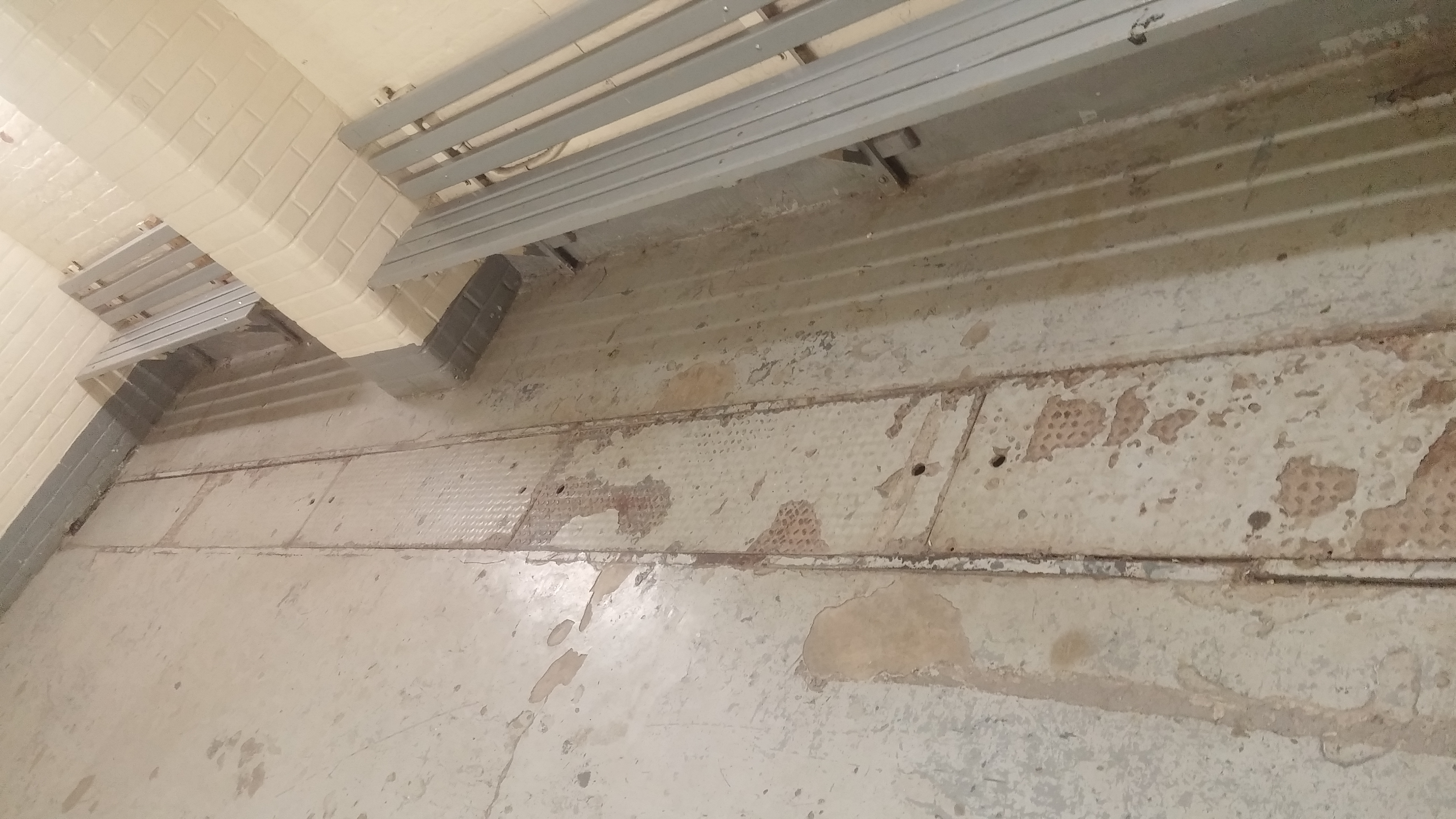
During question period at Queen’s Park on June 8, 2016, Patrick Brown, Leader of the Ontario PC Party and PC Education Critic, asked Premier Wynne about her government’s commitment to the children of this province, given that her government has allowed $15-billion of disrepair to accumulate in Ontario’s publicly funded schools.

MPP Brown asked the Premier, “how many more years will students have to learn and teachers have to teach in our crumbling schools? We must do better. Will the Premier commit to that?” and cites Fix Our Schools several times as he lists specific examples of unacceptable disrepair that impacts students and teachers daily. 

In response to Premier Wynne and Minister Sandals, MPP Brown calls them out on the fact that their increases to education spending are simply not enough and surely not worth bragging about: “The Minister of Education brags that they have a $15 billion problem and they’re going to deal with 7% of it—some 7%. How about all those students in those schools where there’s mould and disrepair?

And goes on to ask Kathleen Wynne, “How can the Premier expect children to learn while they shiver and are forced to wear winter coats in the classroom? Will the Premier commit to dealing with the huge list, the backlog of $15 billion to fix our schools?

Fix Our Schools is thrilled to have this support. Thanks MPP Brown for raising awareness and increasing pressure!  We are now working with both the NDP and PC parties in this province on this issue, which is truly a non-partisan issue!. The children and adults in this province who spend their days in our publicly funded schools deserve better and Fix Our Schools is committed to knocking on every door to find solutions.
We love “unsexy” investments in infrastructure

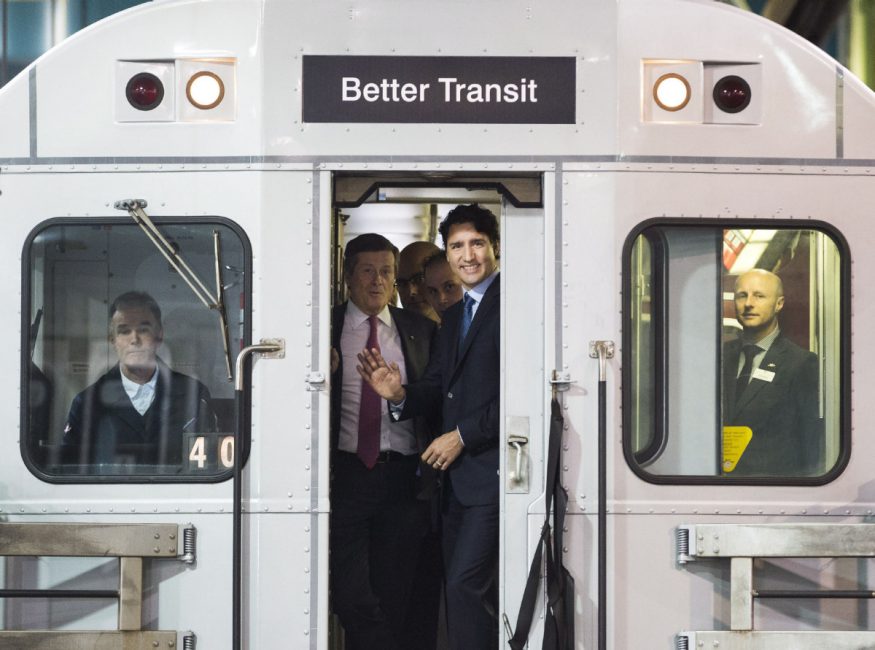
2016_05_30_Trudeau sexy investmentWe, at the Fix Our Schools campaign, are all for unsexy investments in public infrastructure. So we were thrilled to read about “bucks for the unsexy side of transit” by Edward Keenan in the May 7, 2016 Toronto Star and see that Justin Trudeau’s federal government has pledged up to $840-million for TTC maintenance. Yes, that’s right – maintenance of public transit!

While politicians are keen to make sexy investments in brand new infrastructure, they often forget the next logical step of allocating the required funding to maintain that new investment.

In Ontario alone, over $15-billion of disrepair has been allowed to accumulate in our publicly funded schools because our provincial government has chronically and grossly underfunded the maintenance of these important buildings – where 2-million childen spend their days.

Perhaps ribbon-cuttings for new roofs and new boilers in schools is warranted? Somehow, we need to make investing in the maintenance of our publicly funded schools sexy for politicians. 

EQAO a potential funding source to Fix Our Schools?

In a May 15, 2016 article in the Globe & Mail entitled, “Ontario teachers encouraged to withdraw own kids from standardized tests“, an interesting question is raised:

Is the money the provincial government spends each year on EQAO testing the best use of our limited public funds?

“The Federation views province-wide testing of every student in the primary and junior divisions and Grades 9 and 10 as both a misuse of student time, and an ineffective use of funds that should be redirected to support students’ learning,” the ETFO memo stated.

Given the following:

  • Ontario’s Auditor-General has confirmed that the Province has underfunded school repairs in this province by $5.8-billion over the past five years
  • Over $15-billion of disrepair has been allowed to accumulate in Ontario’s publicly funded schools

we do need to question where education funding money is being allocated to ensure that student needs are being met. ETFO raises an interesting perspective by questioning the value of EQAO testing.

With a $15-billion problem to be addressed, Fix Our Schools encourages Kathleen Wynne’s provincial government to consider all possible solutions with an open mind. It is simply not enough to say, “there is no money to fix schools”.

Join us at a Campfire in Toronto on June 9!

You’re invited to a family-friendly campfire to meet others involved with the Fix Our Schools campaign and find out more/exchange ideas on how we can work together to Fix Our Schools! Marshmallows and hot chocolate will be served. 

We know that many of you live outside the GTA but if you happen to be in town on June 9th, we’d love to see you. 

When? Thursday, June 9 from 6:00 pm – 9:00 pm

Where? Dufferin Grove Park, just south of the Dufferin subway – follow the signs to the campfire.

For more information, contact info@fixourschools.ca 

Why have poor school conditions in Ontario not received more attention?

Disrepair in publicly funded schools is complicated. Through our work with Fix Our Schools, we have found that at every turn, stakeholders involved in this issue are reluctant to shine a light on disrepair in Ontario’s schools:

  • Parents don’t want to believe they drop their children off at a school that is in disrepair and so would rather focus on the great things happening in their children’s schools.  
  • Teachers don’t have time or the political will to be the “squeaky wheel” every time there is disrepair in their school that needs addressing. 
  • Principals and Superintendents don’t wish to highlight their school(s) as being in poor condition and risk unleashing a maelstrom of parent anger and frustration (many parents we speak to actually blame principals and caretakers for the disrepair they notice in their children’s schools, which is totally not the case at all!). 
  • Trustees and School Boards don’t want to risk “biting the hand that feeds them” so tend to be “careful” about naming the provincial government’s funding as the root cause of disrepair in schools.
  • Teachers Unions represent individual teacher health and safety concerns when teachers raise these issues. However, they have not focused on disrepair in schools and the impact on teacher working conditions as a key negotiation issue to date.
  • Media want photographs of schools in disrepair to illustrate in vivid detail how disrepair looks and create a newsworthy, sensational story. However, they are unable to get permission to access these schools because no principal wants to be the school featured (understandable!) and so media has not provided adequate coverage to this important issue.   

And so, disrepair in schools gets ignored again and again and continues to get worse – either because of lack of perspective, time, bandwidth, courage, interest, or political will.

So, collectively, we’ve all in some small way allowed the provincial government to continue to underfund school buildings over the past several decades. To fix our schools, we must come together to not only shine a light on this issue but to demand action on this issue from our provincial government. 

To make matters more complicated, much of the $15-billion of disrepair in schools is invisible to the naked eye. Structural concerns, repairs to fire alarm and suppression systems go unnoticed until they fail. You won’t know that the boiler at a school should have been replaced ten years ago until it stops working in February and school gets cancelled for a day! You won’t know that the fire alarm system was broken until … well – you get the idea. So much of the disrepair lurks beneath the surface and is impossible to illustrate, which means people don’t know about it and cannot shine a light on it. 

Imagine if all children attended a school like…

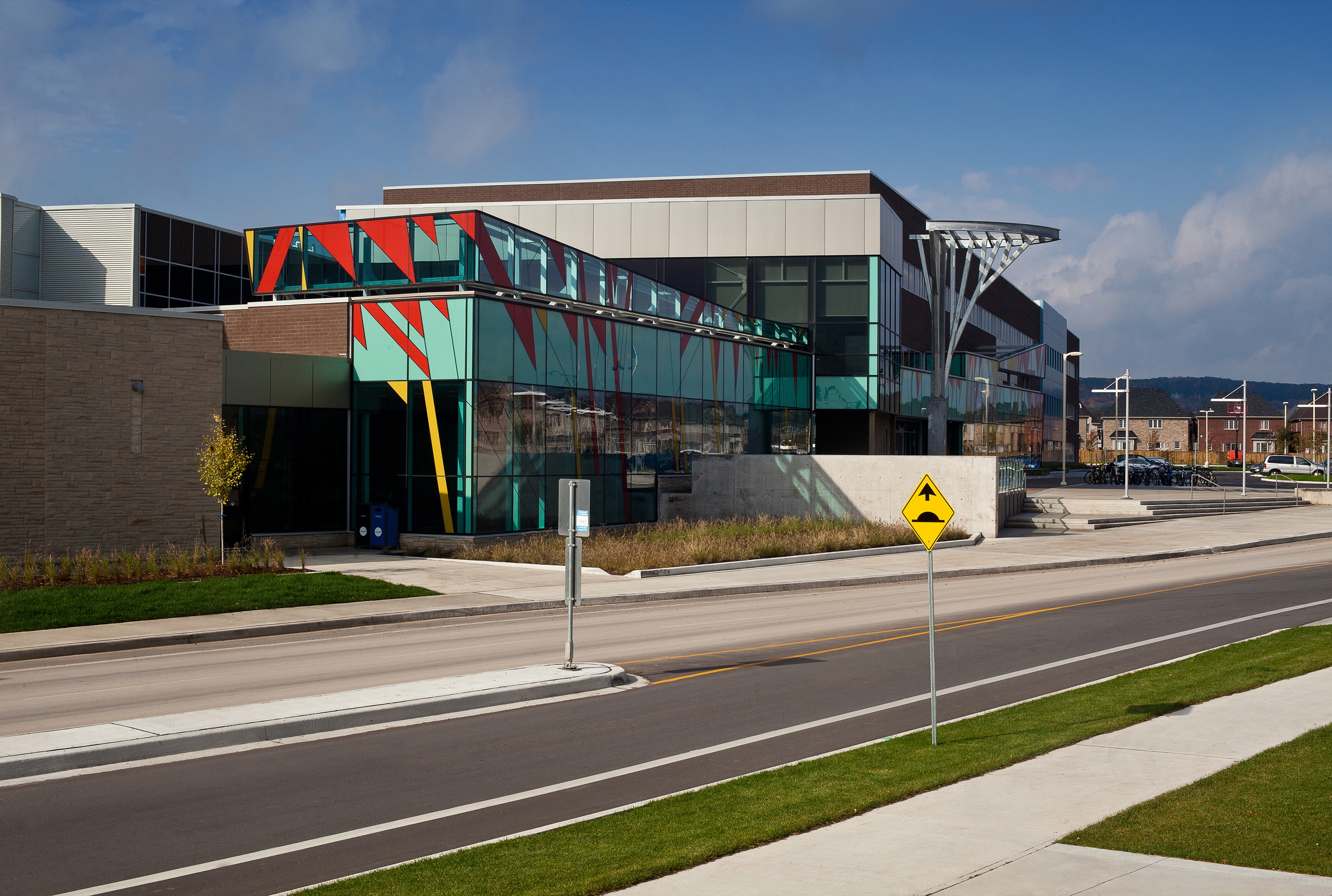
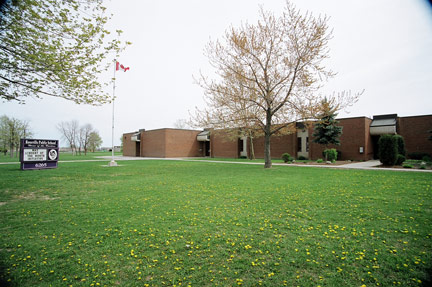
2016_April 18_Photo of Frank Hayden new school in BurlingtonDr. Frank J. Hayden Secondary School in Burlington, Ontario?

Built as part of a community complex, this high school opened its doors in September 2013. As one student wrote in a Burlington Gazette article, “I’m so jealous. I fell asleep in the middle of my math exam in June of 2012. Why did I fall asleep? No air conditioning. Well at Dr. Frank J. Hayden High School they won’t have that problem. They have air-conditioning and I’ve heard it’s absolutely gorgeous. The whole school is new; and new is spectacular!”

Indeed, new is spectacular! While not all Ontario students can attend brand new schools, all Ontario students ought to attend school buildings that are safe, well-maintained and that provide an environment conducive to learning. Let your MPP know that you expect their government to provide sufficient funding to all Ontario’s school boards to address the $15-billion of disrepair that currently exists in Ontario’s publicly funded schools.

Let’s fund schools as the critical infrastructure they are!

There is about $13-billion remaining to be spent by the federal government on infrastructure projects that qualify as part of the “New Building Canada Fund”, which was originally launched by the Conservatives. As highlighted in the April 25, 2016 Globe and Mail article entitled, “Liberals adding tourism, recreational works to infrastructure program”, projects such as hockey rinks and community centre repairs are now able to qualify. While this type of infrastructure spending is popular for communities, their long-term economic benefit is questionable – especially when compared to investments made in health care or education infrastructure.

According to Jamison Steeve, executive director of the Institute for Competitiveness and Prosperity, spending on health care, education and trade are the types of infrastructure that produce long-term gains in terms of high-paying jobs and increased productivity. Building a hockey rink, he said, only produces a short-term boost when looked at from a purely economic point of view.

Asbestos in aging school buildings

On April 26, 2016, ETFO issued this press release:

Aging school buildings prompt the Elementary Teachers Federatino of Ontario (ETFO) to join call for national ban on asbestos

With asbestos in aging school buildings a leading health concern, the Elementary Teachers’ Federation of Ontario (ETFO) has added its voice to the call for a national ban on asbestos.

The call by the Canadian Labour Congress (CLC) for a ban on asbestos coincides with the April 28th National Day of Mourning, which commemorates workers who lost their lives or became sick or injured due to their work. Asbestos is the number one cause of occupational death in Canada, with more than 2,000 people dying every year from diseases caused by exposure to asbestos including mesothelioma, lung cancer and asbestosis. Deaths from mesothelioma increased 60 per cent between 2000 and 2012 according to the CLC.

“We are concerned for our members, students and school communities as asbestos-containing materials such as ceiling tiles and pipe insulation can be present in aging school buildings within view and within reach,” said ETFO President Sam Hammond. “The intense activity in classrooms, hallways and gymnasiums can contribute to asbestos disturbance and put the school at risk.”

In 2014, the ETFO MOU Task Force on Health and Safety Report and Recommendations included a recommendation that the Ministry of Labour and Ministry of Education work with stakeholders to develop a provincial asbestos guidance document for school boards to manage and mitigate the risks of airborne asbestos exposure in schools. The Task Force report was developed by ETFO and the Ontario Public Supervisory Officers’ Association (OPSOA), with technical support from the Ministries of Education and Labour.

“It also makes practical sense for Ontario to develop a mandatory requirement for a public registry of asbestos in public buildings such as schools and hospitals,” added Hammond. Saskatchewan established such a registry in 2013.

The Elementary Teachers’ Federation of Ontario represents 78,000 elementary public school teachers, occasional teachers and education professionals across the province.