Author Archives: admin

Corporate Income Taxes are Key

As a new decade begins, Fix Our Schools wants to focus on the big picture of how we can achieve the goal of ensuring that all publicly funded schools in Ontario are safe, healthy, well-maintained buildings that provide environments conducive to learning and working. Realistically, more money is required to invest in the critical public infrastructure we call schools if we are to see this goal achieved.

To increase the amount of public money available to invest in public infrastructure, our provincial and federal government have a few options: 

  1. Raise our personal income taxes.
  2. Find “efficiencies”, which is often a euphemism for cutting services to its citizens.
  3. Increase corporate taxes from big companies.


So let’s take a look at why the third option outlined above might be the best way to ensure governments have more money to invest in infrastructure and, specifically, let’s consider the Toronto Star investigative report entitled, “The High Cost of Low Corporate Taxes“, by Marco Chown Oved, Toby A.A. Heaps and Michael Yow. We’ve laid out some of the key points from the report to highlight why governments really ought to be considering corporate taxes as the key to being able to continue to invest in the public goods and services that citizens value.

  • “For every dollar corporations pay to the Canadian government in income tax, people pay $3.50. The proportion of the public budget funded by personal income taxes has never been greater.”
  • “The amount of tax most big companies in Canada pay has been dropping as a proportion of their profits for years, and not only because the corporate tax rate has been cut repeatedly. Canada’s largest corporations use complex techniques and tax loopholes to reduce their taxes significantly below the official corporate tax rate set by the government.”
  • “The financial filings of Canada’s 102 biggest corporations shows these companies have avoided paying $62.9 billion in income taxes (between 2011 and 2016)”.
  • “The 2011-2016 audited financial statements of all large Canadian corporations (those worth more than $2 billion) reveal they paid an average of 17.7 percent tax. During that time, the average official corporate tax rate in Canada for this group of companies was 26.6 percent. That 8.9 percent gap translates into tens of billions of dollars that could have been used to pay for the schools, roads, hospitals, police, and paramedics we all rely on.”
  • “In an average year, the 102 biggest companies in Canada pay $10.5 billion less than they would if they paid tax at the official corporate tax rate” of 26.6% (rather than taking advantage of tax loopholes). $10.5-billion could provide 1.2-million childcare spaces.
  • “The last year that corporations paid as much income tax as people was 1952. That year, the Canadian government was flush with money and used it to start setting up the social safety net with the establishment of the Old Age Security pension program. The private sector was also doing well, as corporate capital investments hit record levels and wages soared. The postwar boom was in full swing and the wealth was being enjoyed widely: Suburbs were exploding, schools and hospitals were built and new highways were laid down across the country.’
  • “Today (in 2016), Canada’s economy is the strongest in the G7, but municipal, provincial and federal governments have to borrow money every year, or dip into savings, to make ends meet. Inequality is at an all-time high. The rich are getting richer, the poor are getting poorer and public infrastructure — from transit to social housing — is failing and falling apart. While Canadian governments have trouble coming up with cash for public services, Canadian companies are rolling in dough.”
  • “Historically, businesses have argued that raising corporate tax will hurt investment. But StatsCan numbers show that drastic cuts to the corporate income tax rate over the last 20 years have not stimulated new business investment. Between 1997 to 2016, Canada’s corporate income tax rate was cut almost in half, from 43 percent to 26.7 percent. But investment in machinery and equipment and in intellectual property is still below the 1997 level as a percent of GDP.”
  • “Peter Nicholson, former Finance Canada deputy minister, says Canada has implemented a market-friendly tax rate but failed to reap the rewards in productivity and innovation.”
  • According to Gabriel Zucman, a Stanford University economist cited in the Toronto Star report, “Some countries, including Canada, have attempted to dramatically cut taxes on the wealthy and let corporate tax avoidance prosper. The result of these ‘trickle down’ policies which started in the 1980s is now clear: income and wealth have boomed for a tiny fraction of the population, but this has not benefitted the rest of the population at all. We must learn the lessons from this big natural experiment. The main lesson is that to have broad-based growth, we need an equitable tax system, where big corporations and high-earners in the financial industry and elsewhere pay their fair share.”

If Canadians agree that we want to continue to enjoy and perhaps even improve upon the public goods and services we have today, then we need to realistically consider how much funding is required and seriously consider looking at the role corporate taxes ought to play in contributing to public coffers.

2019: The Good, The Bad and The Confusing

‘Tis the season for reflecting on the year that is now drawing to a close. In that spirit, we’ve been considering how our provincial government has done in 2019 relative to achieving the vision of the Fix Our Schools campaign. Namely, what has our provincial government been doing in 2019 that would ensure that all of Ontario’s publicly funded schools are safe, healthy, well-maintained buildings that provide environments conducive to learning?

The Good 

  • Doug Ford’s first provincial budget maintained the $1.4-billion/year funding for school repairs and renewal via SCI and SRA funding.  As per industry standards and Ontario’s Auditor-General, the absolute minimum yearly funding to keep Ontario’s schools in a state of good repair is $1.4-billion. With $16.3-billion of disrepair assessed, Ontario’s schools are clearly not in a state of good repair. So, while Fix Our Schools was pleased to see the Ford government maintain the $1.4-billion/year funding level, we continue to advocate for the additional funding required to quickly eliminate the $16.3-billion of disrepair in Ontario’s schools.

The Bad


  • Despite the fact that 58 MPPs in this province signed the Fix Our Schools Pledge during the provincial election, committing to developing a standard of good repair for our schools and to allocating the required funding to achieve these standards, we’ve heard nothing about this topic even being considered as yet. School conditions are important. Research clearly demonstrates that they impact student learning, achievement, health and attendance. With $16.3-billion of disrepair, Ontario’s schools are not providing appropriate learning conditions for many students. Without a standard in place, this will not change. Ontario’s students deserve better and we must work towards developing and implementing a standard of good repair for our publicly funded schools.

The Confusing

  • Education Minister Lecce’s numbers don’t add up. This July press release indicates that the provincial government is investing $13-billion in capital grants for schools and that this funding will build new schools and help existing schools replace aging heating or air conditioning systems, repair roofs and windows, and install important accessibility features like elevators and ramps. However, $13-billion over 10 years – even if this investment was only for repairs and renewal – is a cut of $1-billion in SCI and SRA funding over 10 years. However, Doug Ford’s tweet in August seems to indicate that this goverment is going to commit $13-billion to building new schools in the coming 10 years and, on top of that, will commit to $1.4-billion/year for repairs and renewal. We’re confused!


Minister Lecce’s Numbers Don’t Add Up

Fix Our Schools co-founder Krista Wylie was interviewed by Press Progress this week about the inconsistent numbers being used by Education Minister Stephen Lecce, when it comes to his government’s commitment to funding school repairs, renewal and builds.


The following article, entitled “Questions Remain About the Ford Government’s School Repair Funding” raises some concerning disconnects on the figures being bandied about by Minister Lecce and Premier Ford about their funding commitment to ensuring Ontario’s publicly funded schools are safe, healthy and well-maintained.

Questions Remain About the Ford Government’s School Repair Funding

While the Ford government continued the previous government’s school repair and renewal funding for the 2019-20 year, its 10-year pledge is lower than previous ones and less than what’s needed to address disrepair in Ontario’s school system, critics say.

Facing resistance from parents and educators over plans to raise class sizes and cut education funding, the Ford government frequently cites school capital funding as proof it’s “committed” to education.

Last week, for example, Education Minister Stephen Lecce told the legislature:

The Premier has demonstrated a firm commitment to improving education by putting more money in the system than ever before. He’s committed to that, because we’ve doubled the mental health envelope in this province. We’ve invested more to improve schools—a $550-million renewal to build new schools and improve existing schools.

And, on Nov. 7 the minister said:

It is this government that is investing over $13 billion over the next decade to improve schools

But, the minister also said on Nov. 7:

What I also made clear is that we’re maintaining a $1.4-billion allocation to maintain our schools. After 15 years of dereliction of duty, where we had a multi-billion-dollar backlog that we inherited, we must do more to improve our schools.

The government’s pledges have been uneven.

For example, if the government were to continue spending $1.4 billion per year, as it did in 2019-20, on “funding to support the repair and renewal of school facilities,” it would seemingly come to a ten-year total of $14 billion — not $13 billion.

Krista Wylie, Fix Our Schools Campaign Co-Founder, told PressProgress that also falls short of the previous government’s commitment of $16 billion, over ten years, to renewals, repairs and new builds. “The $13 billion target is a $3 billion cut from what the Liberals promised. And even if you don’t include new school building in that $16 billion amount, it is still less than $1.4 billion per year.”

Wylie said, further, “the representatives of the government we spoke to were not able to give us a good explanation for that. Their finance and accounting folks said they could not say more than $13 billion — because that’s all there was allocated.”

Economist Hugh Mackenzie told PressProgress “It is a cut relative to the previous plan. And that, in turn, falls far short of what would be needed to address the school condition problem.”

The current backlog for school repairs reportedly sits around $16.3 billion. Mackenzie said “ongoing depreciation means that renewal expenditures equal to between 2% and 4% of the value of the buildings will be required annually. And those expenditures will be required, even if the current maintenance backlog were somehow eliminated. ”

On Nov. 6, Lecce told the legislature the government has committed to a “2.5% allocation when it comes to renewal.”

Asked by PressProgress if the government is committed to maintaining its current $1.4 billion annual investment, or the previous government’s $16 billion commitment, or the $16.3 billion estimated repair backlog, the ministry of education did not respond.

‘Tis the Season for Holiday Concerts… Have a Look Around Your Child’s School

With the holiday season upon us, many parents across Ontario will be invited to attend holiday concerts in their children’s schools. We encourage you to take a look around that school building and send us photos of what you see! The good, the bad and the ugly. We’d love to see it all.

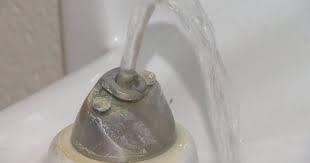
With $16.3-billion of disrepair in Ontario’s publicly funded schools, we know there are many examples of school buildings in poor condition that provide substandard learning environments for students. As parents, we do not often have the occasion to spend time in our children’s school buildings but one parent, who volunteers as a STEM Coach in her local public school has taken these photos of disrepair:


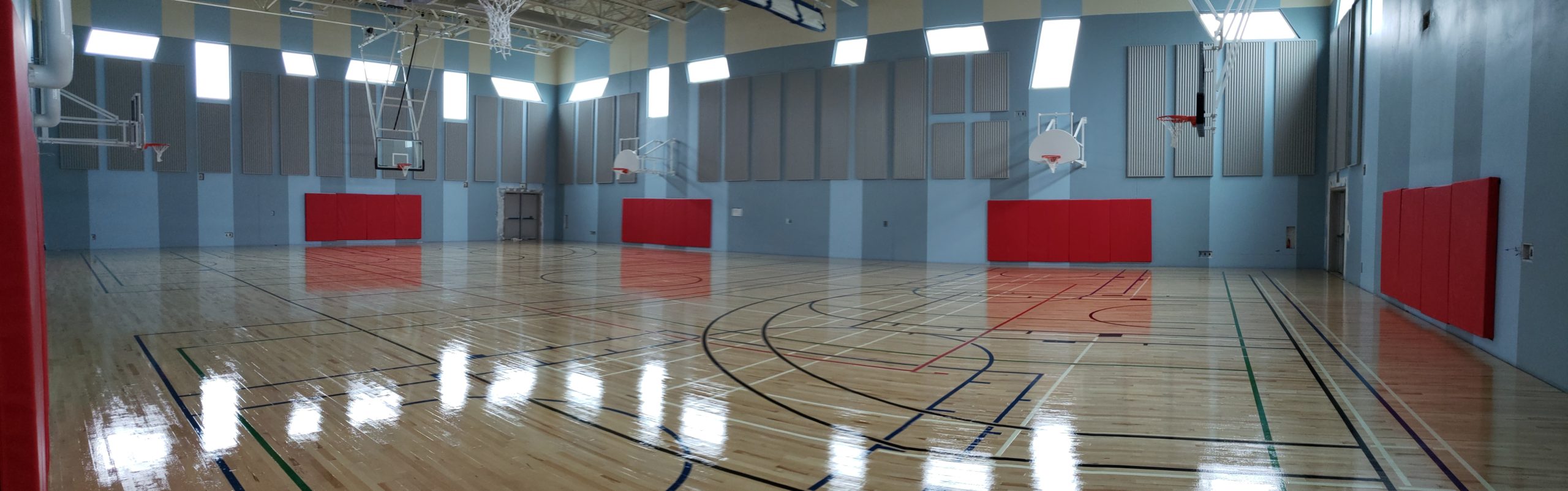
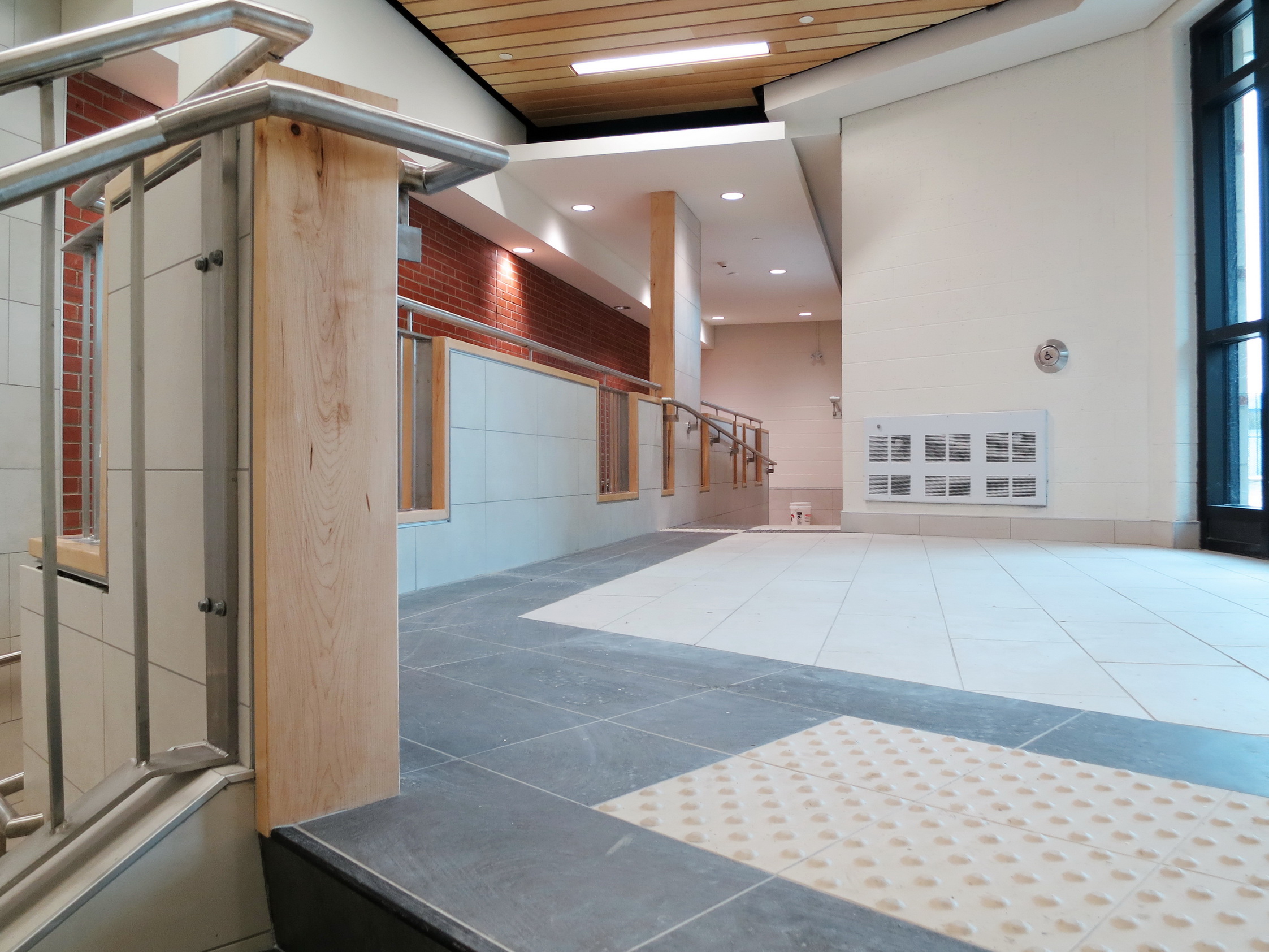
On the flip side, we also know that there are wonderful examples of new and old school buildings in this province that are in great shape and offer excellent learning environments for our children, like the ones below:


So please, as you visit your local public school this holiday season, take a quick photo and send it to us at info@fixourschools.ca.


Halton Region Calls Upon Ontario’s Ministry of Education to Remove Lead Pipes from Schools

In a December 6, 2019 article in the Toronto Star entitled, “Tainted water revelations spark calls for action across Canada“, Oakville Mayor Rob Burton was cited as one of 24 Halton Region Councillors who voted unanimously in favour of a resolution calling on Ontario’s Ministry of Education to remove lead pipes from the region’s schools.


After concerning findings of a national tainted water investigation, many jurisdictions across the country are calling for action, including demands for replacement of lead pipes running to homes and schools, replacement of lead fixtures in public buildings, better testing and increased transparency on results of lead testing. Experts agree there is no safe level of lead in water.

Oakville Mayor Burton’s concerns about lead in water in schools stem from findings that more than 2,400 schools and daycares in Ontario exceeded the federal guidelines for lead in water over the past two years, with some tests showing lead levels more than 200 times more than the federal safety standard. Burton said, “Since education has been starved for a long-time, I appreciate they weren’t rolling in money to go after the problem. It’s a provincial responsibility so we thought we would call on the Ministry of Education to get the lead out.

Halton Region politicians also wrote a letter to Education Minister Stephen Lecce, asking for swift action to resolve lead in water in Ontario’s publicly funded schools. Mayor Burton said that if the provincial government fails to take action, that would be “an abdication of the province’s responsibility for schools“. Burton went on to say, “we just want the government to do its job, and I think anybody thinks the job of the ministry is to teach kids and keep them safe while they do it.”


John Tory Willing to Take the Road Less Travelled

On December 4, 2019, Mayor of Toronto John Tory took a bold stand for a politician these days in supporting a plan to extend and increase a property tax levy called the city building fund, which would go towards public transit repairs and more affordable housing.

In a CBC Metro Morning interview with Matt Galloway on December 5, 2019, Tory defended this bold move, saying that Toronto could not afford to NOT find funding for these integral parts of the city’s infrastructure. Fix Our Schools believes the same could be said about pubicly funded schools and education. Ontario cannot afford to NOT find proper funding for this integral part of our society and for the crumbling buildings where Ontario children spend their days trying to learn.


A property tax levy, such as the one being proposed by Toronto City Council, is one of the few revenue tools available to municipal governments. However, our provincial and federal governments have a much larger toolbox for adding revenue to public coffers, and must start looking at how corporate taxes ought to contribute more in tax dollars to the society from which they benefit. It is time to acknowledge that the public goods we say we want require proper government funding and simply cannot be sustained through “finding efficiencies”.

Tax is not a four-letter word. Really. It’s not. Thank you to John Tory for taking the road less travelled and acknowledging that all levels of governments must dig into their tool boxes to find the appropriate funding sources to ensure that critical public goods like our publicly funded education system continue to be strong. Recent research shows that 90% of Ontarians support investing in school infrastructure and that Ontarians are twice as likely to say spending money on public education is more important than eliminating the deficit.  


The Time to Invest in Publicly Funded Education is Now

Last week, the Ontario Public School Board Association (OPSBA) and Nanos Research released polling data regarding many public education issues. This data confirmed that Ontarians view money spent on publicly funded education as an important investment in Ontario’s future and that the provincial government should prioritize education spending over tackling the deficit. Over 90% of Ontarians supported investing in school maintenance and repairs.

Back in August, Premier Ford declared that his government was going to invest $13-billion in building new schools over the coming 10 years; and that his government was going to continue to invest $1.4-billion each year for school repairs.

Recognizing that there are many urgent issues to be addressed in the education sector at the moment, Fix Our Schools urges the Ford government to begin investing in building new schools in Ontario. Back in July 2019, Minister Lecce announced that the provincial government would finally resume the process to approve new school buildings after a year hiatus when zero new school buildings were approved in this province.  We’re still waiting to hear how this process is unfolding and we are still lamenting that this government’s actions allowed over a year to pass with zero investment in new school buildings. 

As Ontarians declared in the recent OPSBA and Nanos research polls, the time to invest in publicly funded education in Ontario is now. 


Students at Ottawa Public School Lose Two Days Due to Mould

According to CBC report on November 22, 2019 entitled, “Parents worried over mould exposure at Ottawa school,” Alta Vista Public School was closed on November 21st and 22nd after staff discovered a leak in the school’s heating system on November 18, 2019.

Sufficient mould seemed to have been present that one 11-year-old student, Benson Ptasinski, came down with a runny nose and sore throat on Monday and then started complaining of sore eyes the next day. Apparently, other students and teachers were experiencing symptoms similar to her son’s early in the week.

Mike Carson, chief financial officer for the Ottawa-Carleton District School Board (OCDSB) said three or four teachers had complained about odours and air quality in their classrooms earlier in the week, but it wasn’t until early last Wednesday that the board realized the scope of the problem, or how long repairs would take. That’s when the decision was made to shut the 70-year-old school last Thursday and Friday.

Alta Vista Public School was closed Thursday and Friday, but expected to reopen Monday. (Kimberley Molina/CBC)


Mould, asbestos, lead in water, roof leaks, classroom temperatures requiring children to wear winter coats indoors. Unfortunately, all of these issues are a reality in publicly funded schools across Ontario. Fix Our Schools believes that all children deserve to spend their days learning in buildings that are safe, healthy, well-maintained and that offer environments conducive to learning. We trust that our provincial government agrees and will take immediate steps to:

90% of Ontarians support investing in school infrastructure

On Monday, November 25, 2019, the Ontario Public School Boards’ Association (OPSBA) and Nanos Research released polling data regarding several public education issues ranging from student achievement and well-being to curriculum, funding, and governance.

Fix Our Schools was thrilled to see that the majority of Ontarians agree that spending in public education is an investment in the future and that they are twice as likely to say that spending on public education is more important than eliminating the deficit. Hurrah! We wholeheartedly agree with the majority of Ontarians! In fact, back in April 2019, Fix Our Schools explored how government deficits and debt may not be as scary as many believe.  And in June 2019, Fix Our Schools continued to explore this idea in the blog post entitled, “The High Cost of Low Corporate Taxes”.  We were equally thrilled to see that 90% of Ontarians supported investing in school maintenance and repairs. 

The research results released today also found that:

  • Nearly two-thirds of Ontarians think funding for education should be set based on number of students and inflation rather than overall provincial spending
  • Just over four in five Ontarians support or somewhat support school boards having more autonomy to ensure their budgets reflect local needs
  • Nine in ten Ontarians say it is important or somewhat important to invest in school maintenance and repairs

“These results validate the hard work and dedication of public school boards and our Association,” said Cathy Abraham, President of OPSBA. “Education is the second largest funding line in the provincial budget and it is our hope that these results can help inform decisions to ensure public education is supported by stable and predictable funding. Public education is an investment for the future and we must advocate for those conditions that will help all students succeed.”

We’ve only highlighted the findings that directly relate to Fixing Ontario’s Schools and we encourage people to read the whole research report to confirm how much support for publicly funded education exists in Ontario.


How the Country’s Largest School Board is Handling the Issue of Lead in Water at Schools

The Toronto District School Board (TDSB) is the largest school board in Canada so we were curious to learn more about how this school board handles the issue of lead in drinking water at its schools. When we inquired, we heard back that:

Each year,  as required under Ontario legislation, the TDSB conducts testing for lead in drinking water. This legislation was amended in 2017 and requires school boards to test all sources of drinking water in every school for the presence of lead over a 5 year period. Over the last 3 years, the TDSB has conducted testing on every fixture used for drinking water and/or food preparation in every elementary school and will complete testing at the secondary level by fall 2021. Ontario legislation permits us to finish by 2022.  Based on those test results, the Board is required to undertake a number of potential strategies to ensure that the water in schools is safe to drink.  The primary strategy used is daily/weekly flushing of fixtures. However, we also replace fixtures as required. 

Furthermore, we heard back that:

  • All exceedances are reported to the Ministry of Environment, Conservation & Parks (MECP) within 24 hours.
  • Corrective actions are taken immediately for each exceedance and reported to the local Public Health Unit and the MECP.
  • When an exceedance impacts the entire plumbing system, the school is provided with alternative drinking water (e.g. bottled water) and parents are notified.
  • When there is an exceedance in the standing sample, that specific fixture will be flushed daily. When there is an exceedance in the flushed sample, the fixture is taken out of service immediately to eliminate any further risk to occupants of the building. Re-sampling or replacement of the fixture is done in accordance with the standards set out by Ontario Regulation 243/07.   If permanent removal of the fixture is recommended, this is reviewed with the head caretaker and principal.

Of note is that the TDSB must follow provincial guidelines for lead in water, which allow for up to 10 parts per billion (ppb) of lead whereas the federal guidelines are more stringent and allow for only up to 5 ppb. Therefore, it seems evident that Ontario ought to make some changes to its guidelines to ensure they are as stringent as the federal guidelines in place.

We found the following on the TDSB website, which provides additional detail to the responses provided above. We’d encourage parents in other school boards to find out how their local school board handles the issue of lead in water at schools and send us details!

Drinking-Water Safety in Schools from TDSB Website:

The City of Toronto’s water treatment facilities are some of the best in the world. Designated drinking water sources in our schools are safe to drink and are tested on a regular basis, according to provincial regulations.

Samples are collected between May 1 and October 31 each year as per Ontario Regulation 243/07. All samples are analyzed by an independent laboratory certified by the Ministry of Environment, Conservation and Parks (MECP). Based on sampling results, a variety of corrective actions are taken, which may include more frequent flushing at individual fixtures or throughout the entire school. From time to time, a drinking water source may be taken out of service to conduct upgrades or make repairs to the fixture/tap. The vast majority of TDSB schools have no reported lead exceedances in their drinking water. When exceedances occur, they are dealt with immediately and corrective action is taken. In Ontario, results over 10 ug/L (micrograms per liter) or ppb (parts per billion) of lead are considered exceedances. Health Canada recommends 5 ug/L (or ppb). Ontario schools are subject to Ontario standards. Please see the Questions and Answers below for more information on drinking water in TDSB Schools.

What is a “designated drinking water source”?

Designated drinking water sources are water sources designated for consumption such as:

    • Water fountains
    • Bottle filling stations
    • Taps in kitchens, food preparation areas, staff rooms, and childcare areas

Is the water in TDSB schools safe to drink?

Yes, drinking water in our schools is safe to drink. We follow Ontario Ministry regulations by testing our drinking water sources for levels of lead and flushing our plumbing on a regular basis to ensure the highest quality of drinking water.

What is the process for testing drinking water sources?

As per our protocol and according to provincial regulations, the TDSB tests drinking water sources for lead at its 582 schools on an annual basis. This is in addition to the water testing conducted by the City of Toronto.

In order to test the water, two samples are taken: one is a “standing water” sample, which is taken from the tap/bottle filling stations after all the water has been sitting for a minimum of six hours. The other is a “flushed” sample that is taken after running the tap/bottle filling stations for a minimum of five minutes and letting it sit for 30 minutes. Samples are sent to an independent lab certified by MECP.

What happens if there is an exceedance?

When there is an exceedance in the ”flushed” sample, the fixture is taken out of service to eliminate any further risk to occupants of the building. Re-sampling or replacement of the fixture is done in accordance with the standards set out by Ontario Regulation 243/07.

When there is an exceedance in the standing sample, that specific fixture will be flushed daily.

The TDSB ensures a safe drinking water source is available within the school while individual fixture exceedances are being investigated or addressed. In Ontario, results over 10 ug/L (micrograms per liter) or ppb (parts per billion) of lead are considered exceedances. Health Canada recommends 5 ug/L (or ppb). When measuring exceedances, the Toronto Star used Health Canada, not the Ontario benchmark. Ontario schools are subject to Ontario regulations.

How often are drinking water sources flushed at TDSB schools?

Based on sampling results specific to your school, there are three options:

    • The school conducts weekly flushing on Mondays.
    • The school conducts weekly flushing on Mondays, and specific individual fixtures require daily flushing.
    • The school conducts daily flushing, Monday through Friday.

Does the TDSB inform parents when there is an exceedance?

The provincial government doesn’t require school boards to notify parents in case of exceedances. However, when an exceedance impacts the entire plumbing system and the school is placed on an alternative drinking water method (e.g. water bottles), principals notify parents. These cases are rare as usually, only individual fixtures are impacted.

When an individual fixture is impacted (e.g. it needs to be replaced) and it is taken out of service, the school principal is informed, but no notification will be sent to parents. However, the TDSB will ensure that all students have access to a water source nearby. In either instance, the principal is notified and a corrective action taken.

Why is it important to test drinking water sources for lead?

Lead found in tap water usually comes from the corrosion of older fixtures or the solder that connects pipes. In certain circumstances, extended contact between standing water and these components can cause the lead to be released from the pipes.

When the tap is turned on, water that has been standing in the pipes may have accumulated lead levels that exceed Ontario’s standard for lead.

Recent media coverage on safe drinking water suggested that the City’s advice to residents to “flush” water in their homes before testing it may not provide a true representation of lead exposure. Some experts have suggested that testing should be done before flushing for more accurate results. While flushing usually washes residual lead away, flushing before testing may not alert residents to lead residue in the water. What does the TDSB do to get the most accurate results?

The media was referring to the advice the City provides for residential water systems (e.g. home or apartment dweller). Schools and childcare centres are held to a much higher standard of testing and flushing than residential water systems, and testing is governed by rigorous procedures set out in government legislation and regulations. The procedures are as follows:

The collection, analysis and reporting around lead sampling is overseen by the Ministry of Environment, Conservation and Parks and very clearly outlined within Ontario Regulation 243/07.

TDSB follows the sampling process as outlined within the Ontario legislation.

    • Water sits a minimum of 6 hours
    • 1st sample is collected before flushing (standing water)
    • Flush 5 min, let it sit for 30 minutes
    • 2nd sample (after flushing) is collected (flushed water)
    • In circumstances where lead is detected through the analysis, the standing sample usually shows a higher concentration, demonstrating that the flushing is in fact doing the job of washing the residual lead in the system away.

What are the changes introduced by the provincial government in 2017?

On July 1, 2017, the Ministry of Environment, Conservation and Parks (MECP) formerly known as the Ministry of Environment and Climate Change amended Ontario Regulation 243/07 (Schools, Private Schools and Child Care Centres) under the Safe Drinking Water Act , introducing new requirements for the testing of drinking water sources.

Under previous provincial legislation, the TDSB tested nearly 600 fixtures each year. Under the revised regulation (Ontario Reg. 243/07), approximately 11,000 fixtures need to be tested. As a result, the Board has identified which fixtures were for drinking water or food preparation and which were not.

The TDSB, similar to other school boards, decided that, for testing purposes, most classroom taps would not be designated as drinking water sources for consumption. It’s important to note that all students have access to a nearby safe drinking water source.

As part of the amendments to Ontario Regulation 243/07, schools boards are required to sample all designated drinking water fixtures over a period of three years for elementary schools and five years for high schools. Once the three or five-year period is over, and unless new amendments to the regulation are introduced, school boards will be required to sample a minimum of one fixture per school, per year.

Why are the “Handwashing only” signs displayed on some fixtures?

While the source of water is the same throughout the building, the “Handwashing only” signs are a visual indicator that these fixtures are not considered ‘drinking water sources’ and are not tested for lead. Instead, these fixtures/taps are to be used for handwashing and other classroom purposes only (e.g. washing brushes used in art classes or lab pipes).

Hand washing poster with the words

Where can I find the water test results for my child’s school?

All sampling results are kept in the ‘Flushing and Sampling for Lead in Drinking Water Systems’ binder in the head caretaker’s office. It provides information on the location of designated drinking water sources in the school as well as test results. Parents can request from the principal to review this binder on-site at any time.

Who can I contact for additional information?

If you have questions regarding drinking water in our schools, please contact your child’s school.

Additional information on water sampling results can also be found in the ‘Flushing of Drinking Water Systems’ binder at your school which can be accessed through the principal, during normal school hours